
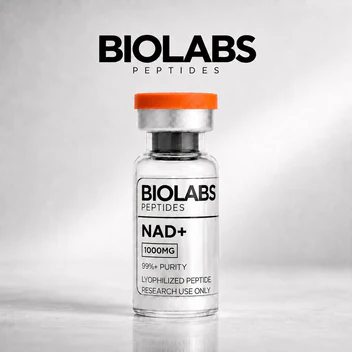
NAD+ is a critical coenzyme found in all living cells and is essential for life. It exists in two forms: NAD+, which is the oxidized form, and NADH, which is the reduced form. It serves as a primary electron carrier in the mitochondrial electron transport chain, facilitating the conversion of nutrients into adenosine triphosphate (ATP). Beyond its metabolic role, NAD+ acts as a required co-substrate for enzymes such as sirtuins and poly(ADP-ribose) polymerases (PARPs), which regulate gene expression, DNA repair, and cellular aging. Research indicates that systemic NAD+ levels decline significantly with age, and its depletion is a hallmark of various metabolic and neurodegenerative conditions.



Reviews
There are no reviews yet.